Roth IRA vs. Traditional IRA: Which Account Fits Your Tax Situation?
Compare tax treatment, contribution limits, and withdrawal rules to choose Roth, traditional, or a mix for retirement savings.
The One Difference That Matters
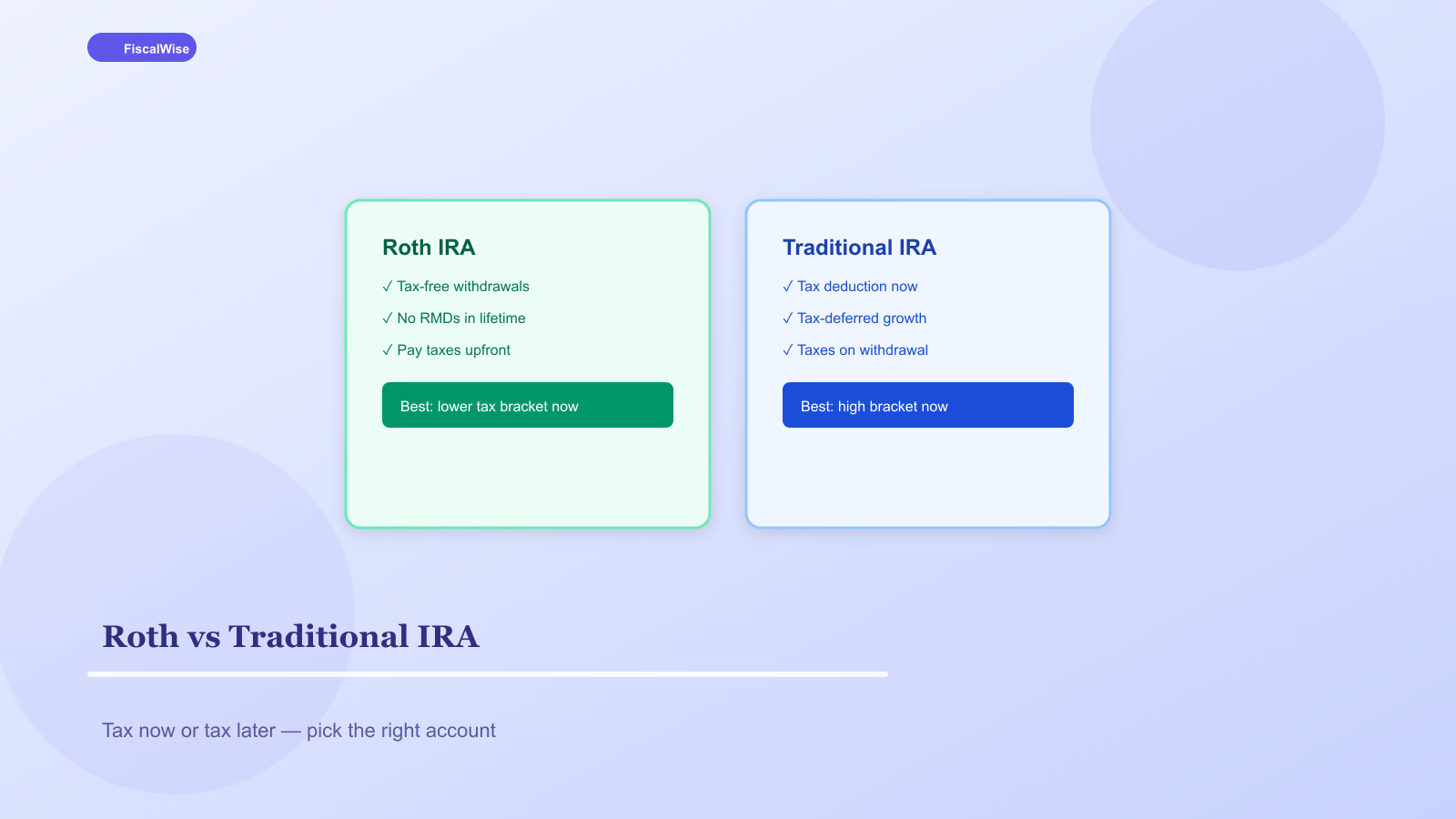
Traditional IRA contributions may be tax-deductible now; you pay ordinary income tax on withdrawals in retirement. Roth IRA contributions are made with after-tax dollars; qualified withdrawals — including investment growth — are tax-free.
The choice is a bet on your tax rate now vs. later. Lower rate today than in retirement? Traditional deduction helps. Higher rate later, or you want tax-free legacy? Roth wins.
Side-by-Side Comparison
| Feature | Traditional IRA | Roth IRA |
|---|---|---|
| Tax break | Often upfront deduction | None upfront |
| Growth | Tax-deferred | Tax-free if qualified |
| Withdrawals | Taxed as income | Tax-free after 59½ + 5-year rule |
| RMDs | Required at 73+ | No RMDs for original owner |
| Income limits | Deduction phases out with workplace plan | Contribution phases out at higher incomes |
Check current IRS limits annually — our retirement savings calculator projects growth; contribution caps are updated in tax guides each year.
Who Should Favor Traditional
- High earners in peak tax brackets who need deduction room
- Workers without Roth 401(k) who want immediate tax relief
- People expecting lower income in retirement — smaller bracket, same state
Run marginal rate estimates with our tax bracket calculator before assuming the deduction beats Roth.
Who Should Favor Roth
- Young workers in lower brackets — pay tax now at 12–22% vs. unknown future rates
- Savers who max workplace plans and want tax diversification
- Anyone who values tax-free inheritance for heirs (rules apply)
- Early-career households expecting income to climb
Tax Diversification: Why Not Both
Retirement tax risk is unknown — Congress, state moves, RMDs pushing you into higher brackets. Holding traditional, Roth, and taxable accounts creates flexibility:
- Live on Roth in years with extra income spikes
- Use traditional when income is low
- Harvest taxable lots strategically
Conversion Strategies
Roth conversions move traditional IRA dollars to Roth, paying tax now. Popular in low-income years — career break, early retirement before Social Security, layoff year. Spread large conversions across tax years to avoid jumping brackets.
Model conversion cost with the tax bracket calculator — converting $40,000 might fill the 22% bucket but push the next dollar into 24%.
Withdrawal Rules You Cannot Ignore
Traditional: 10% penalty on most withdrawals before 59½, plus tax. Exceptions exist for first home, education, SEPP — read IRS guidance.
Roth: Contributions can be withdrawn anytime tax-free — growth cannot without penalty until qualified. Five-year clock applies per conversion.
Workplace Plan Interaction
If you have a 401(k), IRA deductibility may phase out by income. You can still contribute non-deductible traditional and consider backdoor Roth — advanced move with pro-rata rule pitfalls; consult a CPA if balances are mixed.
Projecting Outcomes
Same $6,500 annual contribution for 30 years at 7% growth:
- Traditional saves taxes upfront each year
- Roth pays tax now but $X grows tax-free
Which wins depends on rate differential. Our investment return calculator and retirement projection tools help stress-test assumptions — not predict Congress.
Practical Decision Flow
- Get employer 401(k) match first — free money
- If in low bracket, fund Roth IRA
- If need deduction, fund traditional IRA or increase 401(k) pre-tax
- Max available tax-advantaged space
- Taxable brokerage for overflow
Roth vs. traditional is not loyalty oath — it is tax timing. Pick what matches this decade's bracket, revisit after major life changes, and build both when you can.
Topics covered
- Roth IRA
- traditional IRA
- retirement accounts
- tax planning
Frequently Asked Questions
Can I contribute to both a Roth and traditional IRA?
Yes, but combined contributions cannot exceed the annual IRA limit. Tax deductibility of traditional contributions may phase out if you have a workplace retirement plan and income above IRS thresholds.
When does a Roth IRA make more sense than traditional?
Roth often wins when you are in a lower tax bracket now than you expect in retirement, want tax-free withdrawals, or value tax-free inheritance for heirs. Young workers in the 12–22% bracket are common Roth candidates.
What is a Roth conversion?
Moving money from a traditional IRA to a Roth by paying income tax now. Popular in low-income years — career breaks, early retirement before Social Security — to fill lower tax brackets deliberately.
Are Roth IRA withdrawals always tax-free?
Contributions can be withdrawn anytime tax-free. Earnings require you to be 59½ and meet the five-year rule for qualified tax-free withdrawals. Non-qualified earnings withdrawals may trigger tax and penalty.