Dollar-Cost Averaging Explained: Invest Steadily Through Market Ups and Downs
Why investing fixed amounts on a schedule beats trying to time the market — and how DCA behaves in bull and bear years.
What Dollar-Cost Averaging Means
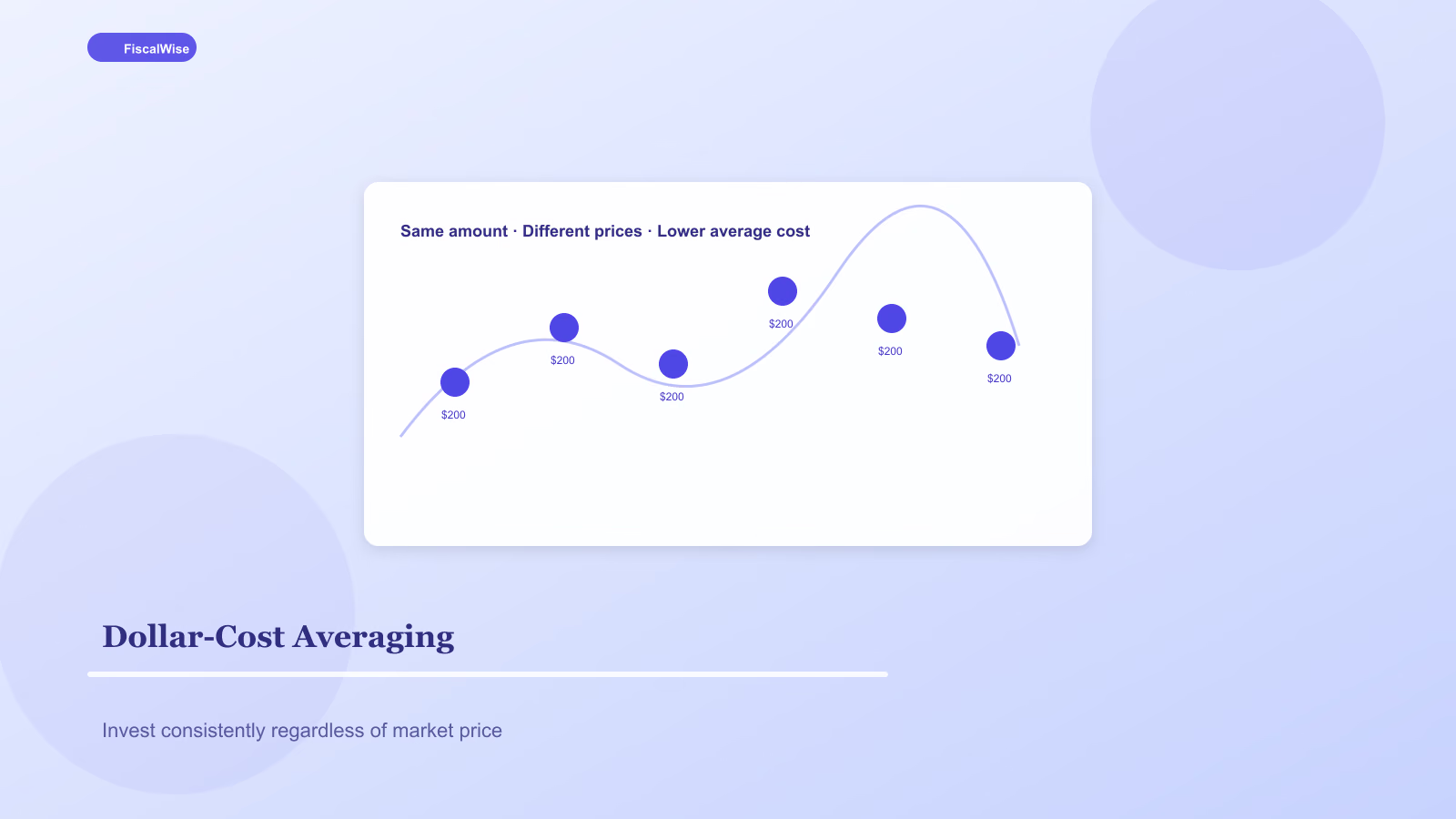
Dollar-cost averaging (DCA) is investing a fixed dollar amount on a regular schedule — $200 every payday into an S&P 500 index fund, regardless of whether the market is up 3% or down 8% that week. You buy more shares when prices are low and fewer when prices are high. The average cost per share smooths over time.
DCA is not mathematically optimal in every scenario — lump-sum investing beats DCA on average because markets trend up — but DCA wins on behavior. Most people do not have a lump sum, and those who do often panic when they wait for a "dip" that never comes or invest right before a drop.
A Simple Example
Invest $500 monthly into a fund:
| Month | Price per share | Shares bought |
|---|---|---|
| ---: | ---: | ---: |
| Jan | $50 | 10.0 |
| Feb | $40 | 12.5 |
| Mar | $55 | 9.1 |
You invested $1,500 total and own 31.6 shares. Average price was not $48.33 — your average cost is $1,500 ÷ 31.6 ≈ $47.47, better than the simple average price because you bought more when cheap.
DCA vs. Lump Sum vs. Market Timing
| Approach | Pros | Cons |
|---|---|---|
| DCA | Reduces timing regret, fits paychecks | May lag lump sum in long bull runs |
| Lump sum | Maximizes time in market | Emotionally hard after transfers |
| Timing | Theoretical best if perfect | Almost nobody is perfect |
Research consistently shows missing the best market days hurts returns more than bad entry timing. DCA keeps you participating.
Where DCA Fits in Real Life
401(k) contributions — Classic DCA from every paycheck.
IRA funding — Monthly auto-transfer beats scrambling in April.
Windfalls — Some split large bonuses: invest one-third now, DCA the rest over six months if volatility terrifies you.
Model long-run outcomes with our compound interest calculator and measure realized returns with the investment return calculator.
DCA Does Not Fix Bad Investments
Averaging into a single speculative stock still concentrates risk. DCA into diversified index funds spreads company risk. The strategy is about entry timing, not due diligence bypass.
Bear Markets and the Psychology Win
When headlines scream crash, DCA forces disciplined buying. Your $500 buys more shares than last year — exactly what you want before recovery. Pausing contributions "until things calm down" is market timing with extra steps.
Crypto and DCA
Crypto DCA is popular on social media. Extreme volatility makes averaging behavior visible — but asset class risk remains extreme. Treat crypto as satellite speculation, not core retirement DCA, unless you accept total loss.
Setting Up Your DCA System
- Pick account — 401k, IRA, brokerage
- Choose low-cost index fund or ETF
- Set automatic transfer on payday
- Increase contribution with raises
- Revisit allocation yearly, not daily
Dollar-cost averaging trades perfect math for reliable execution. For most households, reliable execution is what builds wealth.
Topics covered
- dollar-cost averaging
- DCA
- investing strategy
- market timing